
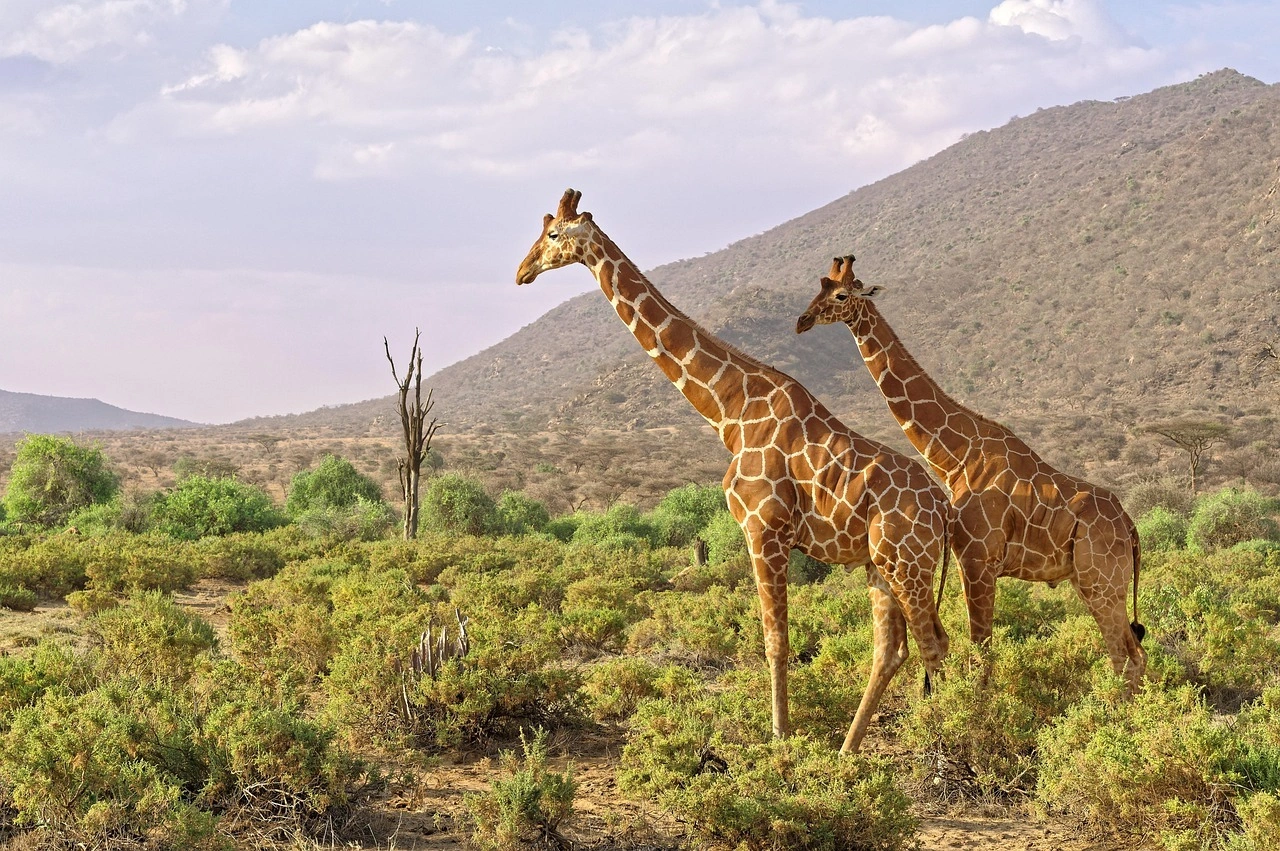
A safari in Samburu National Reserve looks and feels different from one in Kenya's southern grasslands. Beyond the wide skies, rocky hills and doum palms along the Ewaso Nyiro River, Samburu is celebrated for five remarkable animals adapted to the dry landscapes of northern Kenya. Together, they are known as the Samburu Special Five: Grevy's zebra, reticulated giraffe, gerenuk, Beisa oryx and Somali ostrich.
For travellers searching for a Samburu Special Five safari, identifying the animals is only the beginning. Understanding their behaviour, the places they use, and the best way to plan game drives helps make the experience more rewarding. This guide introduces all five, explains what else you can see, and shows how to build a practical Samburu safari from Nairobi.
What are the Samburu Special Five?
The name refers to five northern dryland species associated with Samburu and neighbouring conservation areas. They are not called 'special' because they are the largest or most dangerous animals; the group celebrates species that add a distinctive northern Kenya character to a wildlife safari. Samburu County identifies these five in its official tourism guide.
The Samburu Special Five are different from the familiar African Big Five of lion, leopard, elephant, buffalo and rhino. Samburu is also known for elephants and predators, but visitors should not confuse the two wildlife lists or assume that all five species will appear during a single game drive.
1. Grevy's zebra: the zebra with narrow stripes
The Grevy's zebra is notably different from the more widespread plains zebra. Its stripes are narrow and closely spaced, its ears are large and rounded, and its belly is largely white. Its tall, almost donkey-like profile makes it one of the easiest Special Five species to recognise once a guide points out the details.
Grevy's zebra is endangered, so observing it in the wild also introduces the conservation challenges facing northern Kenya's dryland wildlife. Livestock grazing, movement across a connected landscape, access to water and the protection of suitable habitat all affect the species' future.
What to look for: unusually large ears, fine stripes, a pale belly and a tall, elegant outline. Pause to observe how the animal behaves rather than photographing only its markings.
2. Reticulated giraffe: Kenya's striking northern giraffe
A reticulated giraffe has large, clearly defined reddish-brown patches separated by pale lines. The pattern often looks like a geometric network, noticeably different from the irregular patches seen on some other giraffe types. Against Samburu's acacia woodland and warm-toned hills, these giraffes create distinctive photographic scenes.
Reticulated giraffes browse on trees and shrubs, often using their height and long tongues to reach foliage inaccessible to many other herbivores. They are worth observing for a few minutes, especially when feeding or moving through open ground.
What to look for: large polygon-shaped patches with bright, narrow dividing lines. Ask your guide to compare their coat pattern with other giraffes you may have seen on safari.
3. Gerenuk: the antelope that stands to feed
The gerenuk, sometimes called the giraffe gazelle, is a slender antelope with an elongated neck and small head. It is famous for standing on its hind legs to browse leaves above the reach of many other antelope. Seeing one rise upright beside a shrub can be among Samburu's most memorable wildlife moments.
This feeding strategy helps gerenuk exploit dry bush habitats. They often blend into vegetation and may be overlooked by visitors concentrating only on larger animals. Quiet driving, patience and a guide who understands their preferred habitat improve your chances of noticing them.
What to look for: a long neck, delicate build, large ears and the characteristic upright feeding posture. Keep binoculars ready when driving through scrubby areas.
4. Beisa oryx: the antelope with long straight horns
The Beisa oryx is a striking dryland antelope with a pale grey-brown coat, dark facial markings and long, nearly straight horns. Both males and females may carry horns, so they cannot be identified by horns alone. Oryx are well adapted to open, arid environments and can be found grazing or resting in groups.
Their simple, elegant silhouette makes them appealing to photographers. Early or late light can emphasise the strong lines of the horns without requiring the vehicle to approach too closely.
What to look for: straight spear-like horns, bold black-and-white face markings and a compact, muscular body.
5. Somali ostrich: the big bird with a distinctive appearance
The Somali ostrich is associated with the Horn of Africa and northern Kenya's dry country. Adult males can show bluish-grey skin on the neck and legs, although appearance varies by sex and maturity. Like other ostriches, this flightless bird is built for fast running and moves across open terrain with a surprisingly long stride.
Ostriches are easier to appreciate when you watch more than one behaviour: walking, feeding, displaying or interacting with other birds. In the right setting, a single ostrich against rocky Samburu scenery makes an excellent environmental photograph.
What to look for: a tall flightless bird, long legs and neck, and the characteristic blue-toned skin of adult males.
Where can you see the Samburu Special Five?
Samburu National Reserve sits on the northern bank of the Ewaso Nyiro River in Samburu County. The reserve covers approximately 165 square kilometres, according to the county government. Its varied terrain includes river-edge vegetation, acacia country, grassland and rocky landscapes.
The five species use different parts of this ecosystem. Your guide may explore open country for Grevy's zebra and oryx, woodland edges for giraffes and scrub vegetation for gerenuk. No fixed location can promise a sighting, and wildlife movement changes with rainfall, water availability and disturbance.
Nearby Buffalo Springs and Shaba also form part of the wider northern safari experience, though they are separate reserves with their own access arrangements and fees. A good safari itinerary should be clear about exactly which protected areas are included.
For destination details, visit our Samburu National Reserve guide.
What other animals can you see in Samburu?
Although the Special Five often attract visitors to Samburu, the reserve is also celebrated for elephants and sightings of large predators such as lions, leopards and cheetahs. Buffalo, kudu, impala, crocodiles and varied birdlife may also feature on a game drive, depending on the area and conditions.
The Ewaso Nyiro River gives Samburu a green corridor through the dry landscape. Watching elephants approach a riverbank or seeing birds move between riverine trees can be as impressive as completing a species checklist. We encourage travellers to enjoy the full ecosystem rather than treating every drive as a race to locate five named animals.
Best time to visit Samburu for wildlife viewing
Samburu can be visited throughout the year. June to October and January to March are commonly favourable drier periods for safari travel. Vegetation can be less dense and animals may concentrate around dependable water sources. During greener periods, scenery becomes more lush, birdwatching can be rewarding and visitor numbers may be lower.
Rainfall patterns are not identical every year. The short rains commonly fall around October to December and longer rainy periods often occur around March to May, but the precise onset and intensity vary. Check current road and reserve conditions before travelling, especially when planning connections between multiple parks.
If photography is your priority, sunrise and late afternoon light can matter more than choosing a particular month. If you need to fit a Samburu visit into school holidays, plan the vehicle, lodge and travel days to keep younger travellers comfortable.
How many days do you need in Samburu?
Two nights in Samburu are a sensible starting point for many road-based visitors. This usually provides an arrival-day drive, a fuller safari day and time to travel onwards. Three nights allow more wildlife sessions, better flexibility around weather and a less hurried experience for photographers or families.
A single overnight from Nairobi is possible on paper, but can feel rushed once transfer time is taken into account. For a more satisfying route, allow time to explore both the riverine and drier habitats at different hours.
Suggested 4-day Samburu and Nanyuki itinerary
Day 1: Nairobi to Samburu. Depart in the morning and travel north to Samburu. After arrival and lunch, enjoy an introductory game drive, looking for elephant herds and dryland species.
Day 2: Samburu wildlife. Spend the day exploring with morning and afternoon drives. Focus on the Special Five without making sightings a guarantee. If you choose a cultural visit, arrange it respectfully and separately from your wildlife schedule.
Day 3: Samburu to Nanyuki. Travel south towards the Mount Kenya region, where the scenery changes noticeably. Depending on the confirmed programme, a relaxed afternoon or an optional nearby wildlife experience may be possible.
Day 4: Nanyuki to Nairobi. Return to Nairobi, allowing enough time for road traffic and any airport arrangements.
This route is based on the structure of Euclea's 4 Day Wildlife and Culture in Samburu and Nanyuki, which can be tailored to your group.
Can Samburu be combined with Ol Pejeta and Meru?
Yes. A combined journey helps travellers discover how varied Kenya's wildlife landscapes can be. Samburu introduces northern dryland species; Ol Pejeta adds rhino conservation and the Sweetwaters sanctuary; Meru National Park offers greener, river-fed wilderness and a rhino sanctuary of its own.
Rather than fitting all three into the shortest possible trip, consider whether the itinerary provides enough time for drives at each destination. Euclea's 6 Day Samburu, Meru and Ol Pejeta Northern Circuit is one starting point. Travellers with additional days can request more time in their favourite area.
Where should you stay on a Samburu safari?
Lodges and camps vary from practical mid-range accommodation to more exclusive safari properties. The position of your accommodation matters. A lodge near the reserve entrance may be convenient, while a property inside the reserve or wider ecosystem may offer a different game-drive rhythm. Clarify the exact location, reserve fees, meal plan and travel time to the areas you wish to explore.
Families should check room configurations, swimming pool arrangements, child-friendly menus and any activity limits. Couples and photographers may care more about quieter settings, flexible private drives and time on the river. A good accommodation choice supports the safari itinerary rather than working against it.
How to photograph the Samburu Special Five responsibly
Use a telephoto lens or binoculars rather than asking a driver to get too close. Photograph the environment as well as the animal: a Grevy's zebra in open country or a giraffe among acacia trees tells a richer story than an isolated close-up. Wait for natural behaviour, keep voices low and avoid blocking an animal's route to water.
The best approach is patient and ethical. Wildlife does not perform on demand, and no photograph is worth forcing an animal to move or separating a young animal from its group.
Frequently asked questions about the Samburu Special Five
What are the five special animals in Samburu?
They are Grevy's zebra, reticulated giraffe, gerenuk, Beisa oryx and Somali ostrich. Each is associated with northern Kenya's dryland habitats.
Is the Samburu Special Five the same as the Big Five?
No. The Big Five are lion, leopard, elephant, rhino and buffalo. Samburu's Special Five are a separate group celebrated for their regional wildlife character.
Can I see all five in one day?
It is possible to encounter several or even all five during a successful visit, but there is no guarantee. Multiple drives across different habitats improve the overall experience.
Are there lions and elephants in Samburu?
Yes. Samburu is well known for elephants and supports large predators, including lions and leopards. Predator sightings are less predictable than the presence of the animals in the ecosystem.
Is Samburu worth visiting if I have already been to the Maasai Mara?
Yes, particularly if you enjoy contrasting landscapes and different species. Samburu offers a distinctive northern Kenya experience rather than a smaller version of the Maasai Mara.
Is Samburu suitable for a family safari?
It can be, particularly with a private guide and sensible travel pacing. Choose accommodation with suitable family facilities and allow plenty of rest between transfers and wildlife drives.
Plan a Samburu Special Five safari with Euclea Safaris
We can design a private Samburu safari that allows time for wildlife observation, comfortable accommodation and optional extensions to Ol Pejeta or Meru. Tell us your travel month, number of travellers and whether you are most interested in rare wildlife, photography, families or a wider Northern Kenya circuit.
View our Samburu and Nanyuki safari or contact Euclea Safaris for a tailored northern Kenya itinerary.