
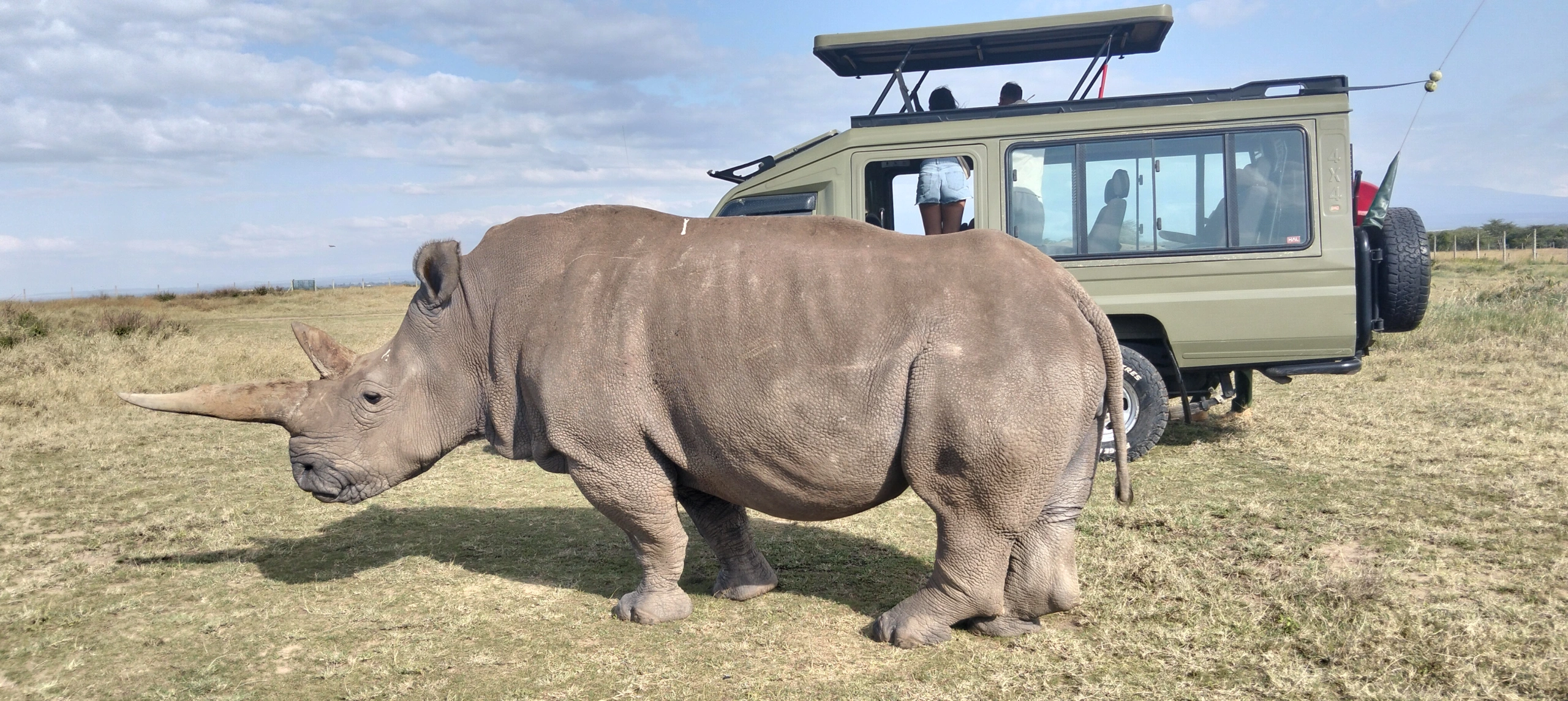
A rhino sighting is one of the moments many travellers hope for on a Kenya safari. At Ol Pejeta Conservancy, that encounter can be part of a much bigger story. Set on the Laikipia plains near Nanyuki, Ol Pejeta combines classic game drives with carefully managed conservation programmes, including the protection of endangered black rhinos and the last two surviving northern white rhinos.
For travellers planning an Ol Pejeta rhino safari, the important question is not simply whether rhinos live here. It is how to choose the right experiences, allow enough time, understand what is included in the safari price and travel responsibly. This guide explains what to expect and how to turn a visit into a well-paced Northern Kenya journey.
Why is Ol Pejeta one of Kenya's leading rhino safari destinations?
Ol Pejeta protects both black and southern white rhinos within a wider landscape of grassland, acacia woodland and river habitats. It is also home to Najin and Fatu, the last two surviving northern white rhinos. Their protection is linked to a much larger conservation effort involving wildlife security, veterinary expertise, scientific research and international partners. Seeing an endangered animal is memorable; learning why its survival depends on long-term protection gives the moment its significance.
Unlike a conventional safari that focuses almost entirely on game drives, Ol Pejeta gives visitors the opportunity to build a day around wildlife viewing, conservation education and selected specialist activities. Not every programme is included in the entrance fee, and some require advance reservations. We recommend choosing the experiences that matter most before finalising an itinerary.
Read our Ol Pejeta destination guide for an overview of the conservancy and its place within the Laikipia region.
Black rhinos, white rhinos and the northern white rhino story
Black rhinos: powerful and often elusive
Black rhinos have a hooked upper lip adapted for browsing leaves and woody plants. They may spend time in thick vegetation, making patient guiding and repeated drives valuable. Their behaviour and visibility depend on habitat, temperature, individual movement and other natural factors. A responsible safari never forces a close encounter or drives off authorised tracks.
Southern white rhinos: a different kind of sighting
Southern white rhinos have a broad, square-shaped mouth suited to grazing. They are often associated with more open grassland, although sightings are never guaranteed. Being able to observe both forms of rhino helps visitors appreciate that the word rhino describes animals with different habits and ecological needs.
Najin and Fatu: the last northern white rhinos
The northern white rhino is a subspecies that is functionally extinct in the wild. Ol Pejeta protects the final two living individuals, both females. A guided, bookable conservation experience may provide visitors with a chance to learn about them and the ongoing scientific work associated with their survival. Access is controlled, schedules may change, and the welfare of the animals always takes priority.
The official Ol Pejeta rhino conservation page explains the background and current conservation approach.
Is Ol Pejeta only about rhinos?
Not at all. On the conservancy's wildlife drives, visitors may also encounter elephants, buffalo, lions, giraffes, zebras and antelope. Leopards and cheetahs occur in the wider ecosystem, but they should be treated as possible rather than promised sightings. Birdlife, contrasting vegetation and views towards Mount Kenya can be as rewarding as the headline mammals.
A private vehicle and knowledgeable guide can make a particular difference for travellers who want to slow down, watch animal behaviour and spend longer photographing a sighting. We recommend at least one early morning or late afternoon game drive, when light conditions are often attractive and animals may be more active.
Sweetwaters Chimpanzee Sanctuary: an important distinction
Sweetwaters Chimpanzee Sanctuary offers a different conservation story from Ol Pejeta's wild rhinos. Chimpanzees are not native to Kenya. The sanctuary provides lifelong care for chimpanzees rescued from difficult situations elsewhere in Africa. Visitors see a managed refuge, not a population of free-ranging indigenous Kenyan chimpanzees.
The sanctuary was established in 1993 in partnership with organisations including the Kenya Wildlife Service and Jane Goodall Institute. Visiting can be educational, especially for families, provided guests respect all viewing and welfare rules. Check current visiting periods before scheduling other activities around it. For background, see the conservancy's official chimpanzee sanctuary information.
Which conservation activities should you book?
Ol Pejeta publishes a range of specialist experiences, but they are not all interchangeable. A rhino encounter focuses on the plight of an extremely rare subspecies. Other activities may explain predator monitoring, canine conservation work, wildlife management or the wider relationship between wildlife and surrounding communities.
When planning, ask four practical questions: Does the activity require advance booking? Is there an additional fee? Are there age or mobility restrictions? Does the experience fit the game-drive schedule? Some activities operate at specific times and are subject to animal welfare, weather and availability. The official visitor planning page is a useful reference; always reconfirm arrangements for your travel date.
How many days should you spend at Ol Pejeta?
A day visit can introduce the conservancy, but a three-day, two-night Ol Pejeta safari creates a better balance between transfer time, game drives and conservation experiences. It allows travellers to visit without turning the journey into a long round trip from Nairobi in a single day.
Suggested 3-day Ol Pejeta itinerary from Nairobi
Day 1: Nairobi to Laikipia. Travel north through the central highlands towards Nanyuki and the conservancy. After lunch and check-in, enjoy an introductory afternoon game drive. Depending on the weather, clear views of Mount Kenya may be possible.
Day 2: Wildlife and conservation. Begin with an early game drive. Set aside a pre-booked conservation activity or sanctuary visit during its official time slot, then return to the field later in the afternoon. Do not schedule more specialist encounters than you can comfortably enjoy.
Day 3: Final game drive and return to Nairobi. Enjoy a last morning outing if your lodge and departure schedule permit, then travel back to Nairobi. Road conditions, airport requirements and any onward flight determine the final departure time.
Euclea already offers a 3 Day Wildlife Conservation Safari at Ol Pejeta, which can be used as the starting point for a private quotation.
Getting to Ol Pejeta from Nairobi
The conservancy places itself approximately 220 kilometres from Nairobi, with road access via Nanyuki. The published driving estimate is around four hours, but city traffic, stops and current road conditions can change the journey. For travellers who want to reduce road time, flights into the Nanyuki area may be possible, followed by a ground transfer. Availability and timetables need checking before booking.
Travellers arriving on a long-haul flight should consider an overnight stay in Nairobi rather than rushing into a lengthy same-day transfer, especially when travelling with children.
Best time to visit Ol Pejeta for rhino viewing
Ol Pejeta is a year-round safari destination. The drier periods, commonly January to February and June to October, can make wildlife easier to observe in some areas and provide more predictable road conditions. Greener months bring fresh landscapes and often rewarding photography, although rain can affect visibility, road access and activity timings.
There is no single month when rhino sightings are guaranteed. An experienced guide, sufficient time in the conservancy and realistic expectations are generally more useful than planning around a particular calendar date alone.
Accommodation: inside or near the conservancy?
Accommodation location is an important part of the itinerary, not simply a comfort choice. Staying close to the intended game-drive area can reduce daily transfers and make early departures easier. Properties vary in style from safari camps to more luxurious lodging, and room categories, child policies and meal plans affect pricing.
Before confirming, ask whether the lodge is inside Ol Pejeta or outside the conservancy, which entrance gate is most convenient, how fees are applied, and whether specialised conservation activities can be arranged from the property. If you are planning a family safari, check age restrictions and whether family rooms or interconnecting units are available.
What affects the cost of an Ol Pejeta rhino safari?
The total safari price depends on several different components: your travel dates, nationality or residency fee category, number of travellers, vehicle arrangement, accommodation level, meals and any separately charged conservation experiences. Two itineraries described as a '3-day Ol Pejeta safari' can therefore include very different services.
Ask for an itemised quotation stating park or conservancy entry, accommodation, private transport, driver-guide, meals, airport or hotel transfers and every optional activity. The conservancy publishes its own tariff information, but fees and programmes can change. A tailored quotation avoids presenting an outdated entrance fee as a guaranteed booking rate.
Can Ol Pejeta be combined with Samburu or Meru?
Yes. Ol Pejeta is an excellent addition to a longer Northern Kenya safari. Pairing it with Samburu introduces the dryland species around the Ewaso Nyiro River, while Meru brings broader riverine habitats and an especially spacious wilderness character. Combining all three calls for more careful transfer planning than simply counting the nights.
Consider Euclea's 6 Day Samburu, Meru and Ol Pejeta Northern Circuit, or read our Northern Kenya safari route guide before deciding on an extension.
How to enjoy Ol Pejeta responsibly
Keep a respectful distance from wildlife and follow your guide's instructions. Use authorised routes, avoid loud behaviour and never request an encounter that conflicts with animal welfare or conservancy rules. Viewing rescued chimpanzees and extremely rare rhinos is a privilege with clear boundaries. Choose genuine educational experiences rather than expecting physical contact with wild animals.
Frequently asked questions about Ol Pejeta rhino safaris
Can you see the last two northern white rhinos at Ol Pejeta?
Ol Pejeta offers a specialist, controlled conservation experience associated with Najin and Fatu. Visits require confirmation and may be subject to availability, welfare requirements and additional fees. Do not assume the encounter is included in a standard game drive.
Is Ol Pejeta a Big Five destination?
Ol Pejeta supports the Big Five: elephant, rhino, buffalo, lion and leopard. However, individual species and especially elusive predators are never guaranteed on a particular drive.
Is two nights enough for Ol Pejeta Conservancy?
For many visitors, two nights offer a practical balance between game viewing and a selected conservation activity. Travellers interested in photography or several specialist experiences may appreciate an additional night.
Can children visit Sweetwaters Chimpanzee Sanctuary?
Families can plan a sanctuary visit, but the exact access, age conditions and timing should be confirmed before booking. An educational outing is most enjoyable when the day's travel and game drives leave children time to rest.
Should I choose Ol Pejeta or Samburu for my first northern safari?
Choose Ol Pejeta when rhinos, conservation education and a shorter road journey from Nairobi are priorities. Choose Samburu when distinctive dryland species and dramatic northern scenery are at the top of your list. Read our Samburu versus Ol Pejeta comparison for a fuller decision guide.
Plan your Ol Pejeta rhino safari with Euclea Safaris
An Ol Pejeta safari is most rewarding when we match the right experiences to your interests and allow enough time to enjoy them. We can help you combine private wildlife drives, suitable accommodation and pre-arranged conservation visits into a realistic itinerary, with a Samburu or Meru extension if you prefer a longer journey.
Explore our 3-day Ol Pejeta safari or contact Euclea Safaris with your travel dates, group size and preferred experiences for a tailored quotation.