
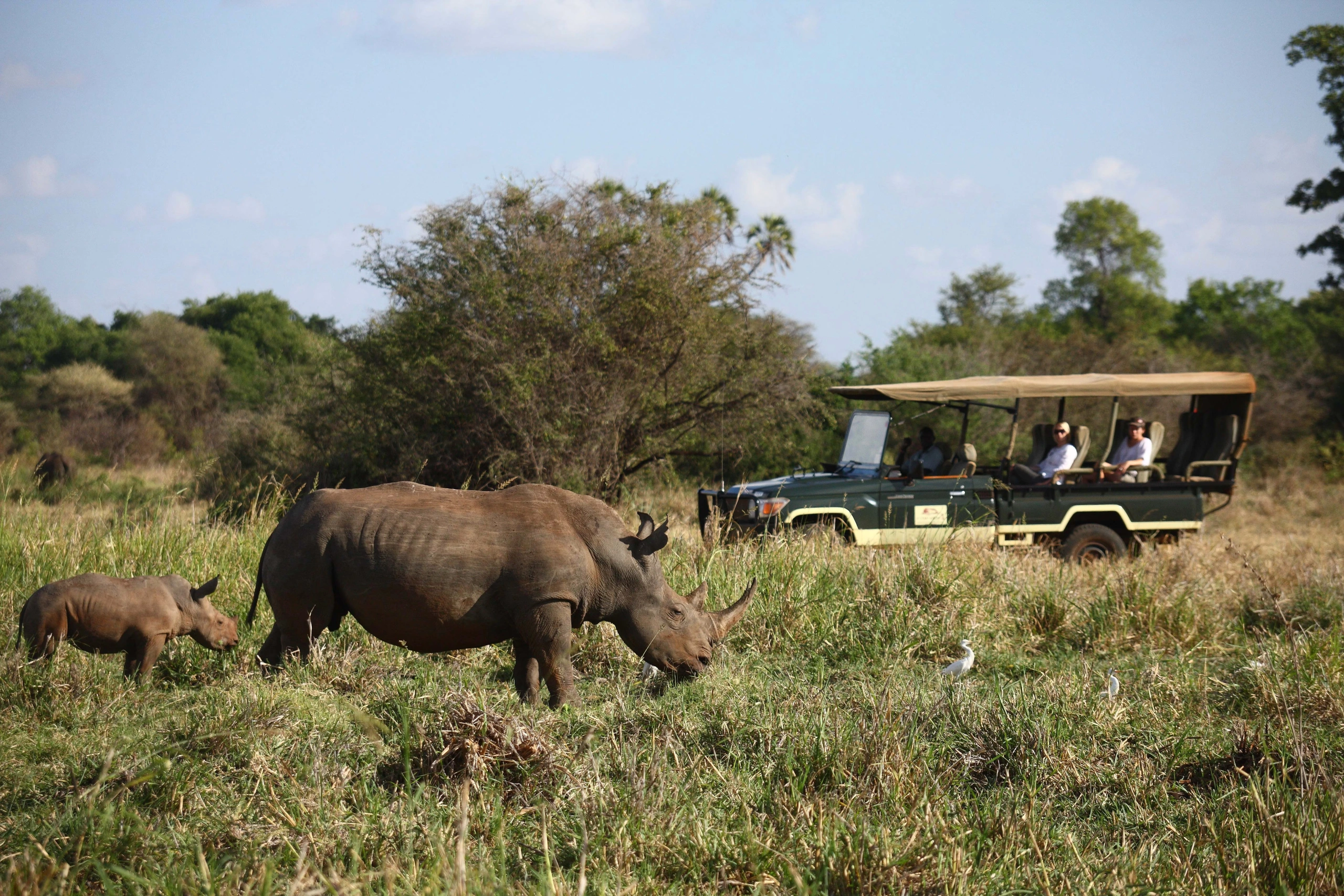
There are Kenyan parks where a game drive can feel wonderfully unhurried. Meru National Park is one of them. Its landscape changes between open plains, woodland, river corridors and rocky viewpoints, creating a safari experience with far more variety than many travellers expect from a destination that receives less attention than the Maasai Mara or Amboseli.
A Meru National Park wildlife safari is about more than ticking animals off a list. The park offers opportunities to look for elephants, predators, unusual northern species and rhinos in a protected sanctuary, while its history is closely linked to Elsa the lioness and the Born Free conservation story. This guide explains the wildlife, the landscape, the best times to travel and how to plan a practical visit from Nairobi.
Where is Meru National Park?
Meru National Park is in eastern Kenya, to the northeast of Mount Kenya. It forms part of a broader conservation landscape and can be reached by road from Nairobi using different routes and entrance gates. The Kenya Wildlife Service lists road approaches through the central highlands and the Embu region, along with airstrips serving the park area.
The right approach depends on your lodge and the gate you will use. A road journey is commonly a substantial part of a safari day, so a comfortable itinerary should allow time for arrival, check-in and a game drive without assuming that every transfer will run to an exact timetable.
Explore our Meru National Park destination guide for a concise introduction to the park.
What wildlife can you see in Meru National Park?
The park supports a broad wildlife community, including elephants, buffalo, lions, leopards, cheetahs, giraffes, antelopes, hippos and rhinos. Wildlife distribution varies across its different habitats, and encounters depend on weather, water, season and the movement of individual animals.
Kenya Wildlife Service highlights Meru's diversity as one of its major strengths. An experienced guide can help you explore grassland, wooded areas, rivers and the rhino sanctuary instead of concentrating only on the most obvious game-viewing tracks.
Elephants and buffalo
Elephants and buffalo are among the substantial mammals visitors may encounter. Watch for how animals use the watercourses, shade and grassland. Larger herds can make an impressive sight, but smaller groups and solitary animals also give opportunities to observe behaviour without rushing.
Lions, leopards and cheetahs
Meru supports big cats, including lions, leopards and cheetahs. Lions may be seen in more open country or resting in shade. Leopards are naturally difficult to spot, while cheetah sightings depend heavily on habitat and movement. All predator sightings should be described as possibilities, not guaranteed inclusions in a package.
Northern Kenya species
Travellers who enjoy the wildlife of Samburu may recognise some animals in Meru, such as reticulated giraffe, Grevy's zebra, Beisa oryx and gerenuk. Their presence makes Meru particularly interesting as part of a broader northern circuit. The exact chances of seeing each species differ by area and conditions, so the guide's local knowledge remains important.
Hippos and other river wildlife
Meru's rivers, pools and riparian habitats can support hippos, water-associated birds and other wildlife. KWS identifies viewpoints and pools among the park's attractions. These habitats provide scenic pauses between the larger mammal sightings and reward travellers who enjoy watching the wider ecosystem.
Does Meru National Park have rhinos?
Yes. Meru has a dedicated rhino sanctuary protecting black and white rhinos. This is an important part of the park's conservation story and a reason to include the destination in a wildlife itinerary. Visits should follow all Kenya Wildlife Service rules, and sanctuary access should be planned according to current arrangements.
Unlike a conservation visit with a scheduled educational experience at Ol Pejeta, a Meru rhino safari is part of a larger national park journey. The two destinations can complement each other, but they should not be described as identical experiences.
For official park guidance, consult the Kenya Wildlife Service Meru National Park page.
Why is the landscape in Meru so distinctive?
Meru is rewarding because the scenery keeps changing. Depending on the area, travellers may cross grassland, pass through wooded country, approach rivers and see rocky outcrops or distant hills. These contrasts support different wildlife communities and create useful opportunities for landscape photography.
The park can look surprisingly lush in greener periods, especially compared with the drier terrain of Samburu. During drier months, open areas and water features may make wildlife viewing easier in some places. Neither setting is better for everyone: photographers, birders and travellers seeking a particular kind of wilderness atmosphere may have different preferences.
Meru National Park and the Born Free story
Meru has a celebrated connection to George and Joy Adamson and Elsa the lioness, whose story became widely known through the book and film Born Free. Elsa was raised by the Adamsons and returned to the wild. The park's conservation heritage remains one of its distinctive attractions, and KWS lists Elsa's Grave among the sites associated with the story.
For visitors, this history adds another dimension to the landscape. Rather than treating the park as scenery alone, a guided discussion about the Adamsons, changing wildlife management and modern conservation can help explain why protecting habitat requires continued effort over generations.
A visit to a historic site may need to be planned around the chosen route and available time; it should not be promised as part of every game drive.
Is Meru National Park good for birdwatching?
Yes. Birding is a major strength of Meru's varied habitats. Kenya Wildlife Service describes the park as a birdwatching destination and identifies more than 400 bird species in its park information. Riverine vegetation, woodland and more open habitats attract different birds, making the park valuable for travellers who enjoy looking beyond large mammals.
Early morning outings are often rewarding for birdwatchers, especially with binoculars and a guide who can help identify calls, shapes and movement. A birding-focused safari should allow time to stop and observe rather than following a strict big-game checklist.
Best time to visit Meru National Park
Meru offers wildlife experiences throughout the year, but dry-season travel can make game driving and access easier, while greener periods bring more vigorous vegetation and dramatic scenery. In Kenya, January to February and June to October are commonly drier travel periods, though weather varies from year to year and by location.
During heavier rains, some routes may require extra care or become less convenient. For visitors who want fewer crowds and lush landscapes, the green season can still be attractive when access conditions are suitable. The best decision depends on your dates, the gate your itinerary uses and the experiences you prioritise.
Before departure, we recommend confirming road conditions, gate access and current KWS guidance rather than relying on general seasonal descriptions alone.
How many days do you need for a Meru safari?
Three days can provide an introduction to Meru if transfers are organised carefully. Four days are more comfortable for travellers who want extra time for wildlife, birdwatching, photography and the park's historic attractions. Two days from Nairobi by road may feel rushed because travelling can absorb much of the available time.
We have covered this decision in more detail in our article on how many days you need in Meru National Park.
Suggested 4-day Meru National Park safari
Day 1: Nairobi to Meru. Travel from Nairobi using the route that suits your confirmed accommodation and park gate. After check-in and lunch, enjoy an introductory afternoon game drive if arrival time permits.
Day 2: Full day exploring the park. Start early for wildlife viewing and spend the day exploring contrasting habitats, with a suitable lunch and rest break. Your guide can choose game-drive areas according to recent conditions rather than following a rigid circuit.
Day 3: Rhino conservation and park highlights. Allow another full safari day. Depending on current access, lodge location and the chosen route, focus on the rhino sanctuary, birdlife or one of Meru's historic sites. Leave time to watch animals rather than travelling continuously between attractions.
Day 4: Final drive and return to Nairobi. Enjoy a last morning outing where feasible, then return to Nairobi. The transfer schedule should account for the route, traffic and any onward travel arrangements.
This structure follows the travel logic of Euclea's 4 Day Meru National Park Safari, which can be adapted to your dates and travel style.
Where should you stay for a Meru National Park safari?
Accommodation location has a major effect on the pace of a Meru safari. A property near the intended game-drive area can reduce unnecessary daily travel and make sunrise departures more practical. Different camps and lodges offer different levels of comfort, meal plans and access arrangements, so the cheapest or most luxurious room is not automatically the best option.
Before booking, confirm the lodge's location relative to the park entrance, the type of room you need, whether the package includes park fees, and how meals and transfers are arranged. Families may need suitable room configurations, while keen photographers may prefer a property that allows flexible morning and afternoon wildlife sessions.
Is Meru better than Samburu or Ol Pejeta?
Each destination offers a different type of safari. Meru is especially attractive for varied habitats, birding, quieter drives and Born Free history. Samburu is well known for northern dryland wildlife and the Samburu Special Five. Ol Pejeta focuses strongly on rhino conservation and bookable wildlife education experiences.
Rather than declaring one park the winner, we recommend choosing according to your wildlife interests and the total time available. Combining Meru with Samburu and Ol Pejeta can create a rich northern Kenya itinerary, provided there is enough time to enjoy each place.
You can review our 6 Day Northern Circuit: Samburu, Meru and Ol Pejeta for a starting route.
Practical tips for a first Meru safari
Bring binoculars even if photography is not your main interest, as many rewarding sightings are a distance from the road. Pack neutral-coloured clothing, sun protection, drinking water, a light warm layer for early mornings and any personal medication. Discuss vehicle type and luggage requirements before booking, particularly if your journey combines road travel and a flight.
Respect all park rules. KWS instructs visitors to remain on designated roads, avoid feeding wildlife, maintain a safe distance and follow the directions of authorised staff. Do not leave the vehicle except at approved places, and never pressure a guide to take an unsafe shortcut to reach an animal.
Frequently asked questions about Meru National Park
Is Meru National Park worth visiting?
Yes, especially for visitors who value varied scenery, wildlife, conservation heritage and a less hurried national park experience. It can be an excellent main destination or part of a longer northern circuit.
Can you see the Big Five in Meru National Park?
Meru supports the Big Five: elephant, buffalo, lion, leopard and rhino. However, their presence does not guarantee sightings of all five during a particular stay.
Are there rhinos in Meru?
Yes. The park has a protected rhino sanctuary supporting black and white rhinos. Access and viewing conditions should be checked for your travel dates.
Is Meru good for families?
It can suit families who enjoy wildlife and quieter landscapes. The key considerations are drive duration, suitable accommodation, game-drive breaks and realistic expectations for young children.
How long does it take to drive from Nairobi to Meru?
Travel time depends on the route, the chosen gate, traffic, road conditions and stops. KWS describes multiple road approaches. Allow a substantial transfer day rather than counting on one universal journey time.
Can Meru be combined with Samburu?
Yes. The two areas provide contrasting habitats and wildlife. A private itinerary should be organised around realistic transfers and enough game-drive time at both destinations.
Plan your Meru National Park wildlife safari with Euclea Safaris
We can tailor a private Meru safari to your dates, interests and preferred accommodation, with enough time to enjoy the wildlife.
Explore the 4-day Meru safari or contact Euclea Safaris to request an itinerary.